
Hundreds of Zimbabwean Nationals Repatriated from Cape Town Amid Growing Community Tensions
Key Takeaways
- Over 300 Zimbabwean nationals were repatriated from Cape Town in June 2026 due to safety and theft concerns.
- Thousands of Zimbabwean nationals in Cape Town are seeking repatriation as a deadline for their status looms.
- The repatriation process has been marked by long waits outside the Zimbabwean consulate, drawing humanitarian concern.
- Economic scarcity and social tensions in local communities are primary drivers for the current wave of departures.
- The situation highlights the ongoing struggle for social cohesion and the protection of foreign nationals in South Africa.
Index Summary
The streets of Cape Town have become the stage for a poignant and difficult human drama as hundreds of Zimbabwean nationals have opted to return to their home country. This mass movement, which saw an initial group of 300 individuals repatriated in mid June 2026, is not merely a logistical exercise in border management but a reflection of deep seated anxieties and the fraying social fabric within some of South Africa's most vulnerable urban neighborhoods. For many who made the journey, the decision to leave was not born of a desire to return to a familiar life, but rather a desperate response to a climate of fear, economic exclusion, and persistent reports of xenophobia that have plagued their daily existence in the Western Cape.
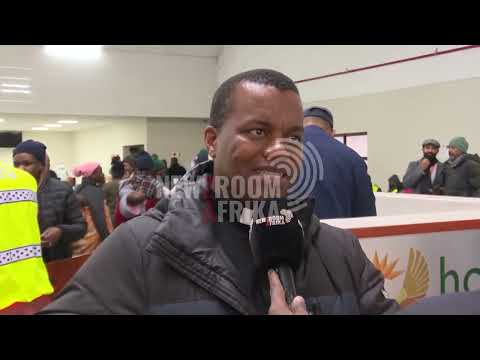
Reports from EWN have highlighted that these individuals cited community theft and a lack of safety as primary drivers for their departure. When people feel that their basic security is no longer guaranteed, the decision to uproot one's life becomes a rational, if painful, survival strategy. The atmosphere outside the Consulate General of Zimbabwe in Cape Town became a focal point of this crisis, as hundreds of people camped out in the open, waiting for clarity on their status and the possibility of a safe passage home. This scene, captured by GroundUp, serves as a stark reminder of the human cost when migration policy and social integration fail to keep pace with the realities of economic hardship.
It is important to understand that this is not an isolated event but part of a broader, more complex narrative involving thousands of individuals. As reported by IOL, a deadline has loomed over the community, creating a sense of urgency that has pushed many to seek repatriation before their options for legal stay or social stability evaporate entirely. The pressure on these individuals is immense, and the uncertainty surrounding their future in South Africa has left many feeling as though they are trapped between a rock and a hard place. The Department of Home Affairs has been at the center of this storm, attempting to manage the influx of requests while balancing the legal requirements of immigration control with the humanitarian needs of those seeking to leave.
Organizations like Gift of the Givers have expressed profound concern regarding the conditions under which these individuals have been forced to wait. Seeing families and vulnerable people spending nights outside government facilities is a sight that has stirred public debate about the state's responsibility toward both its citizens and those who have sought refuge within its borders. The situation is further complicated by the historical context of migration in the region, where the Southern African Development Community has long grappled with the movement of people across porous borders, often driven by the stark economic disparities between nations.
When we look at the broader picture, the tension between local communities and foreign nationals is often exacerbated by the scarcity of resources. In neighborhoods where unemployment is high and public services are stretched to their breaking point, it is all too easy for frustration to be directed toward those perceived as outsiders. This dynamic has been documented extensively in the history of South African politics, where economic anxiety has frequently been weaponized to create divisions. The current repatriation effort is a symptom of this underlying friction, a release valve for a pressure cooker that has been building for years.
Yet, to view this solely through the lens of policy or economics is to miss the human element. Each person standing in that line outside the consulate has a story of why they came to South Africa in the first place, and why they have now decided that the dream of a better life is no longer worth the cost of their safety. The decision to leave is a profound admission of defeat, a realization that the environment they once hoped would provide opportunity has instead become a source of constant threat. This is a tragedy of missed opportunities for integration and a failure of the social compact that should protect all people regardless of their origin.
As the situation continues to unfold, the role of civil society and international observers becomes increasingly critical. The United Nations High Commissioner for Refugees and other humanitarian bodies often find themselves navigating these complex waters, trying to ensure that the rights of migrants are respected even as governments assert their sovereign right to control their borders. The repatriation process is not just about moving people from one place to another; it is about the dignity of the individual in the face of systemic collapse.
Looking ahead, the question remains whether this mass departure will lead to a cooling of tensions or if it will simply pave the way for new cycles of exclusion. If the underlying causes of the friction—namely the lack of economic opportunity and the failure of local governance—are not addressed, the cycle of migration and repatriation will likely continue. The Western Cape Government faces a difficult task in reconciling the needs of its diverse population with the demands of law and order. The path forward requires more than just administrative efficiency; it requires a commitment to social cohesion that has been sorely lacking in recent years.
One must also consider the impact on the communities that these individuals are returning to. Zimbabwe itself is navigating its own set of economic challenges, and the sudden return of hundreds of people who have been living abroad adds a new layer of complexity to the nation's own development goals. The reintegration of these individuals into their home communities will require support and resources that may not be readily available, potentially creating new pressures in the very places they are returning to for safety.
As we move further into 2026, the lessons from this episode will likely be studied by sociologists and policymakers alike. The intersection of migration, economics, and human rights is perhaps the most defining challenge of our time. The individuals who chose to return to Zimbabwe have made a choice that is both personal and political, a choice that speaks volumes about the environment they were living in. Whether or not this leads to a broader shift in how South Africa manages its foreign national population remains to be seen, but the events in Cape Town have certainly brought the issue to the forefront of the national conversation.
Published on July 11, 2026. Fact-checked and verified against referenced sources.
Associated Entities
South African government department responsible for immigration and border control.
A disaster response organization providing humanitarian aid to those in need.
The diplomatic mission facilitating the return of its citizens.
Event Chronology
Consulate gathering begins
Hundreds of Zimbabwean nationals begin camping outside the consulate in Cape Town.
Initial repatriation
The first group of 300 Zimbabwean nationals is successfully repatriated back home.
Humanitarian concern raised
Gift of the Givers expresses concern over the conditions of those waiting at Home Affairs centers.
Deadline pressure
Reports emerge that thousands are seeking repatriation as a deadline for their status approaches.
Community Sentiment Poll
Broader Context
The sight of hundreds of people huddled outside a consulate in the biting chill of a Cape Town winter is a logistical footnote in the annals of regional migration and a visceral manifestation of a social contract that has, for many, effectively dissolved. The repatriation of three hundred Zimbabwean nationals is not a simple administrative transfer of bodies across a line on a map, but the final, exhausted surrender of a dream. For decades, the migration of Zimbabweans into South Africa has been framed by the language of economic necessity, a narrative of survival that often ignores the psychological toll of living in a state of permanent precarity. The recent exodus from the Western Cape, characterized by a desperate, palpable urgency, highlights the reality that the promise of the rainbow nation has been replaced by the cold, hard walls of exclusionary nationalism.
To understand the gravity of this moment, the historical weight that the city of Cape Town carries must be considered. It is a city of profound beauty and equally profound inequality, a place where the ghosts of colonial history and the scars of apartheid dictate the rhythm of daily life. When foreign nationals arrive, they enter a space where the competition for resources is a matter of inherited trauma as much as economics. The tension that has led to this recent repatriation is a continuation of a long, jagged history of xenophobia that has periodically erupted into violence, leaving behind a trail of broken lives and shattered trust. The decision to leave is an admission that the social fabric of the city has become too frayed to hold them, and that the safety sought is no longer attainable in the shadow of rising local resentment.
There is a haunting quality to the images captured by GroundUp of families camping on the pavement. It is a scene that strips away the abstraction of policy and replaces it with the raw, unvarnished truth of human vulnerability. These are not merely statistics or data points in a government report; they are mothers, fathers, and children who have spent their nights on the cold concrete, waiting for a bureaucratic process to acknowledge their existence and facilitate their departure. The presence of organizations like Gift of the Givers at these sites provides a thin, necessary layer of humanity, but their involvement also underscores the failure of the state to provide basic protections for those caught in the gears of migration. It serves as a reminder that when the state retreats from its humanitarian obligations, the burden of compassion falls upon the shoulders of civil society, which is often ill-equipped to handle the scale of the crisis.
The role of the Department of Home Affairs in this unfolding drama is significant. The institution is often viewed through the lens of inefficiency and rigidity, yet it remains the primary gatekeeper of the lives of millions. The pressure on the department to manage the repatriation process is immense, and the bureaucratic hurdles that individuals face are often insurmountable without the intervention of legal or humanitarian groups. This administrative bottleneck is a moral issue. By making the process of departure difficult, the state traps people in a state of limbo, where they are neither fully integrated nor allowed to leave with dignity. This limbo is where the most acute suffering occurs, as families are forced to wait for months, often without access to basic services, while their resources dwindle and their hope evaporates.
The psychological impact of this prolonged uncertainty is substantial. For many of the individuals involved, the decision to return home is the culmination of years of navigating a hostile environment. They have lived in the shadows, working in the informal economy, often subject to exploitation and the constant threat of deportation or violence. The decision to return to Zimbabwe is a final act of agency in a life defined by a lack of control. It is a way of stating that the challenges of their home country are preferable to continuing to exist as outsiders in a land that has made it clear they are not welcome. This is a profound, quiet defiance: a rejection of a system that has failed to offer them a place to stand.
There is a deeper, more troubling implication in this trend of repatriation. It reflects a broader, global shift toward isolationism and the closing of borders, a trend that is particularly acute in the context of the Southern African Development Community. The regional dream of open borders and economic integration is being eroded by the reality of domestic political pressures. When local communities feel that their own economic survival is at risk, they increasingly turn against those perceived as competitors, regardless of the historical or legal realities of their presence. This is a dangerous path, one that threatens to undo decades of regional cooperation and replace it with a patchwork of insular, fearful states that are increasingly unable to address the shared challenges of poverty and inequality.
The language used to describe these events warrants scrutiny. Terms such as repatriation, deportation, and migration are often treated as neutral, technical descriptors. However, these words mask the human reality of displacement, the loss of homes, the separation of families, and the abandonment of dreams. The story of the three hundred is a story of human lives in motion, shaped by forces beyond their control. It is a story that demands a nuanced understanding, one that moves beyond the binary of citizen versus foreigner and recognizes the shared humanity that binds all people. Every individual is, in some sense, a migrant in the grand scheme of history, searching for a place to build a life of dignity and purpose.
What it means to belong in a society increasingly defined by its borders is the question at the heart of the current crisis in Cape Town. The individuals who are leaving are not just leaving a city; they are leaving behind a vision of a society that was intended to be inclusive and welcoming. Their departure is a silent, powerful critique of that vision, a reminder that the promise of a better life is only as strong as the commitment to protect it for everyone. If a society cannot create a space where people from different backgrounds can live and work together in safety, it has failed in a fundamental way. The repatriation of these individuals is a symptom of that failure, a signal that the social contract needs to be renegotiated and strengthened.
The profound silence that often surrounds these events is notable. While the media reports on the numbers and the logistics, the individual stories of those who are leaving are often lost. The public hears about the three hundred, but not about the specific, personal reasons that led each one of them to make the decision to leave. The friendships formed, the jobs held, the children raised, and the dreams abandoned remain largely unacknowledged. This silence is a part of the tragedy, a way of dehumanizing the people involved and making it easier to ignore the moral implications of their departure.
Breaking that silence and listening to the voices of those affected by these policies is necessary. Creating spaces where their stories can be told and where their experiences can inform the discourse on migration and social integration is essential. Moving beyond the abstract and the theoretical to engage with the reality of human lives in all their complexity is required. Only then can a society be built that is truly inclusive and that recognizes the value of every person, regardless of their origin. The repatriation of these individuals is a challenge to the collective conscience, a reminder that there is a responsibility to one another that transcends the borders drawn on maps.
There is a particular poignancy in the fact that this is happening in Cape Town, a city that has always been a crossroads of cultures and histories. The city's identity is built on the movement of people, from the indigenous Khoisan to the colonial settlers, from the enslaved people brought from the East to the migrants who have come from across the continent. To see this history of movement being curtailed by fear and exclusion is a loss for the city itself. It is a narrowing of the horizon, a rejection of the diversity that has been the source of the city's strength and vitality. The departure of these individuals is a sign that the city is becoming less than it could be—less open, less vibrant, and less human.
A new, more humane approach to migration that recognizes the dignity of the individual and the importance of social cohesion is required. This means creating pathways for legal migration that are accessible and transparent, and that provide for the rights and protections of those who move. It means investing in the communities that are receiving migrants, so that they can see the benefits of diversity rather than just the challenges. It means fostering a culture of dialogue and understanding, where people can come together to address their shared problems and build a future that works for everyone.
This is a long-term commitment that requires the participation of all sectors of society, from government and business to civil society and the media. It requires a fundamental shift in the way society thinks about itself and its place in the world. It requires the recognition that individual well-being is inextricably linked to the well-being of others, and that no one can thrive in a world defined by exclusion and fear. The repatriation of these individuals is a test of the commitment to these values, a test that is currently being failed.
There is a profound sadness in the realization that these individuals are returning to a country that is still struggling to find its way. The returnees are not just coming back to a home; they are coming back to a set of challenges that they had hoped to leave behind. The government in Harare has a responsibility to support them, to provide them with the resources they need to rebuild their lives, and to create an environment where they can thrive. This is a challenge that requires a commitment to reform and a willingness to address the root causes of the economic and political crisis that has driven so many people to leave in the first place.
The world is living in a moment of great uncertainty, a time when the old ways of doing things are no longer working and the new ways have yet to be fully realized. This is a time of transition, a time of change, and a time of opportunity. The events in Cape Town are a part of this transition, a sign that the world is changing and that society must change with it. Finding new ways to live together, to share resources, and to build communities that are inclusive and welcoming is the challenge that lies ahead.
The images of the people camping outside the consulate evoke a sense of collective responsibility. Society has created this situation, and there is a role to play in fixing it. Holding leaders accountable, supporting the organizations doing the work on the ground, and speaking out against the xenophobia and the exclusion that are tearing communities apart are necessary actions. Recognizing the humanity of those among us is the starting point.
There is a profound, quiet dignity in the way these individuals are handling their departure. They are not asking for charity; they are asking for the opportunity to live their lives with dignity and respect. They are taking responsibility for their own future, even in the face of overwhelming odds. This is a testament to the strength of the human spirit, and it is a reminder that even in the darkest of times, there is hope. Honoring that hope and working together to create a world where it can flourish is essential.
This is a vision worth pursuing, and it is within reach. The resources, the knowledge, and the capacity to make it a reality exist. What is lacking is the political will and the moral courage to make it happen. The events in Cape Town are a reminder that this will and courage must be found, and that action is required now.
There is a profound, deep-seated need for connection in the human heart, a need to belong to something larger than oneself. This is what drives people to move, to explore, and to build new lives in new places. It is a powerful, life-affirming force, and it is the foundation of civilization. When this need is denied, when walls are built and divisions are created, a fundamental part of humanity is denied. The repatriation of these individuals is a reminder of the cost of that denial, and it is a call to return to the values of connection, compassion, and community.
The challenges faced are shared, and the solutions found must be shared as well. Building a world where everyone has a place, a voice, and the opportunity to thrive is the challenge of the time. The events in Cape Town are a beginning, a reminder that the journey toward a more just and equitable world is one that must be taken together.
As the situation moves forward, the faces of those who stood outside the consulate, their stories, and the lessons they have taught should be remembered. Using this knowledge to build a more compassionate and inclusive world, one where everyone is valued and has the opportunity to live with dignity and respect, is the legacy that must be left for the generations to come. The journey is long, and the road is difficult, but the possibility of a better world remains.
Looking to the future with hope and determination, and working together to build a world defined by compassion and a commitment to the dignity of all people, is the path forward. Learning from the mistakes of the past and striving to create a future that is better, brighter, and more inclusive for everyone is necessary. The events in Cape Town are a reminder that the work is far from over, and that the push for change, the advocacy for justice, and the defense of the rights of all people must continue.
In the final analysis, the story of the three hundred is a story about the power of the human spirit to overcome even the most difficult of circumstances. It is a story about the resilience of the human heart and the enduring hope for a better life. It is a story that reminds us that all people are capable of greatness and of making a difference in the world. Holding onto that belief and working together to make it a reality is essential. The future is waiting, and it is up to society to shape it in a way that reflects its highest aspirations and deepest values.
The story of the three hundred is not just a story about the past; it is a story about the future. It is a story about the choices made, the values upheld, and the world created. It is a story that will continue to unfold. Choosing to be a part of the solution and building a world defined by compassion, justice, and a commitment to the dignity of all people is the only way to ensure that everyone has a place in the future and that the world is a better place for everyone.
Sources & References
This briefing was compiled using data scraped from the following reputable news outlets and search indices: