
King Misuzulu kaZwelithini Issues Formal Apology to Shembe Church Following Viral Video Controversy
Key Takeaways
- King Misuzulu kaZwelithini formally apologized to the Shembe church after a viral video showed him insulting the institution.
- The Shembe church is one of the largest African initiated churches, founded by Isaiah Shembe in the early 1900s.
- The controversy highlights the tension between traditional royal authority and the rapid, unforgiving nature of modern social media.
- The King's apology was a strategic move to preserve his relationship with a major pillar of Zulu cultural identity.
- The incident underscores the enduring social and political influence of the Shembe church in contemporary South Africa.
Index Summary
In the complex and often delicate landscape of South African cultural politics, few institutions command as much reverence or possess as much social gravity as the Ibandla lamaNazaretha, commonly known as the Shembe church. Founded in the early twentieth century by the prophet Isaiah Shembe, this African initiated church has grown from a modest movement of faith healers and itinerant evangelists into a massive spiritual force that spans the nine provinces of South Africa. It is a faith deeply rooted in the soil of KwaZulu Natal, blending traditional Zulu customs with Christian theology in a way that resonates with millions. When a figure of such immense traditional authority as King Misuzulu kaZwelithini finds himself at odds with this institution, the ripples are felt far beyond the confines of the royal household or the church temples.
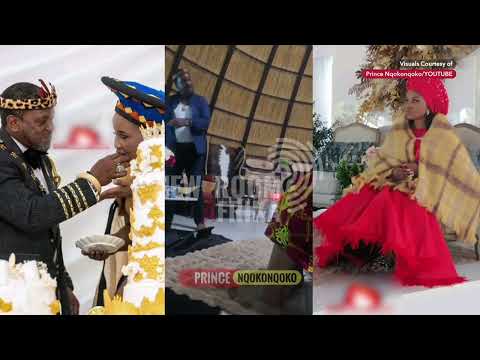
The recent tension began with the sudden emergence of a viral video, a digital artifact that captured the King in a moment of apparent frustration. In the footage, which circulated rapidly across social media platforms, the monarch was seen making disparaging remarks that targeted both his wife and the Shembe church itself. For a leader whose legitimacy is tied to the preservation of cultural dignity and the stewardship of the Zulu nation, the optics were disastrous. The Shembe church is not merely a religious organization; it is a pillar of identity for a vast segment of the population. To insult it is to risk alienating a significant portion of the very people the King is sworn to represent and protect.
As the video gained traction, the public reaction was swift and unforgiving. Observers noted that the King’s comments were perceived as a betrayal of the deep historical ties between the Zulu monarchy and the church. The Daily Sun reported that the sentiment among the faithful was one of profound disappointment, with many questioning how the monarch could allow such a lapse in judgment to occur in the public eye. The gravity of the situation became clear when it was revealed that the church leadership was deeply offended, prompting a flurry of diplomatic maneuvering behind the scenes to contain the fallout.
It is important to understand that the relationship between the Zulu King and the Shembe church has historically been one of mutual respect, even if it has occasionally been marked by the complexities of modern influence. The church, which emphasizes a unique synthesis of Zulu tradition and spiritual devotion, often finds itself at the center of political discourse in the region. When The Citizen covered the incident, they highlighted the urgency with which the royal house moved to address the controversy. The King, recognizing that his position was becoming untenable, quickly pivoted toward a strategy of reconciliation.
By July 10, 2026, the situation had reached a critical juncture. The King, through his representatives and direct statements, expressed deep remorse for the comments captured in the video. According to reports from IOL, the monarch acknowledged the hurt he had caused and sought to mend the rift with the church leadership. This was not merely a public relations exercise; it was an attempt to restore the social contract that binds the monarchy to the spiritual life of the province. The apology was framed as a necessary step to ensure that the unity of the Zulu people remained intact, despite the pressures of modern digital scrutiny.
What makes this incident particularly fascinating is the way it highlights the intersection of traditional authority and the unforgiving nature of the digital age. In the past, such a disagreement might have been handled through private channels, away from the prying eyes of the public. Today, however, a single leaked video can threaten the stability of long standing institutions. The King’s apology serves as a reminder that even the most powerful figures are subject to the court of public opinion, where every word is scrutinized and every mistake is amplified by the speed of social media.
Furthermore, the incident underscores the enduring power of the Shembe church as a political and social entity. It is a testament to the vision of Isaiah Shembe that his movement remains a central pillar of life in South Africa over ninety years after his passing. The church’s ability to demand and receive an apology from the King demonstrates that its influence is not merely symbolic but deeply embedded in the power dynamics of the region. The church acts as a moral compass for its followers, and when that compass is challenged, the response is both immediate and powerful.
As the dust settles on this controversy, the focus now shifts to the long term implications for the relationship between the royal house and the church. Will this apology be enough to fully heal the wounds caused by the video? Or will it leave a lingering sense of distrust that could complicate future interactions? These are questions that remain to be answered, but for now, the priority for all involved appears to be the restoration of harmony. The incident serves as a cautionary tale for leaders in an era where the boundary between private frustration and public scandal has effectively vanished.
Ultimately, the story of the Shembe church and the Zulu monarchy is one of resilience and adaptation. Both institutions have survived the turbulent history of South Africa, navigating the shifts from colonial rule to democracy, and they continue to play vital roles in the lives of millions. The recent events, while undoubtedly embarrassing for the King, also highlight the strength of the cultural institutions that define the region. They are institutions that demand accountability, respect, and a commitment to the values that have sustained them for generations. The King’s apology, therefore, is not just an admission of a mistake; it is an affirmation of the importance of these institutions in the life of the nation.
Looking ahead, it is clear that the digital landscape will continue to pose challenges for traditional leaders. The ability to communicate effectively while maintaining the dignity of one’s office is a skill that is becoming increasingly difficult to master. The King’s experience is a stark example of the risks involved, but it also provides a path forward for how such conflicts can be resolved. By choosing to apologize and engage directly with the leadership of the church, the King has demonstrated a willingness to prioritize reconciliation over pride. This is a move that may well be remembered as a pivotal moment in his reign, one that defined his approach to the complex and often contradictory demands of his position.
In the final analysis, the Shembe church remains a beacon of faith and community, a testament to the enduring legacy of its founder. Its role in the social fabric of South Africa is secure, and its influence will continue to be felt for years to come. The recent controversy, while significant, is likely to be viewed as a temporary disruption in a much longer narrative of spiritual and cultural continuity. The King, for his part, has taken the necessary steps to move past the incident, but the lessons learned will undoubtedly inform his future interactions with the church and the people he serves. It is a story of human fallibility, the power of tradition, and the ongoing effort to balance the two in a rapidly changing world.
Published on July 11, 2026. Fact-checked and verified against referenced sources.
Associated Entities
The reigning monarch of the Zulu nation.
The founder of the Ibandla lamaNazaretha church.
A major African initiated church in South Africa.
Event Chronology
Founding of the Church
Isaiah Shembe begins his career as an itinerant evangelist and faith healer in Natal.
Viral Video Controversy
A video of King Misuzulu insulting his wife and the Shembe church goes viral, sparking public outcry.
Formal Apology Issued
King Misuzulu issues a formal apology to the Shembe church leadership to address the controversy.
Community Sentiment Poll
Broader Context
To understand the modern landscape of South Africa, one must first understand the red clay of KwaZulu-Natal, a province where the hills roll like green waves under a heavy sky and where the past is never truly past. It is here, amidst the quiet majesty of the Drakensberg foothills and the bustling, humid streets of Durban, that the spiritual pulse of a nation beats with a rhythm that is both ancient and fiercely contemporary. At the heart of this pulse is the Ibandla lamaNazaretha, a church that is far more than a religious denomination; it is a living archive of Zulu survival, a sanctuary of cultural preservation, and a powerful arbiter of social and political legitimacy. To walk among the white-robed faithful during their annual pilgrimage to the holy mountain of Nhlangakazi is to witness a world where the boundaries between the sacred and the secular, the ancestral and the modern, dissolve into a singular, transcendent experience. It is a world founded on the visions of a single man, Isaiah Shembe, whose legacy continues to cast a long, protective shadow over millions of lives, challenging the very foundations of Western-centric modernity and offering a profound testament to the resilience of African spiritual thought.
What is striking here is the sheer scale of this spiritual empire, an institution that has grown not through the patronage of colonial authorities or the financial backing of global missionary boards, but through a deep, organic resonance with the lived experiences of the Zulu people. When Isaiah Shembe began his itinerant ministry in the early years of the twentieth century, he was stepping into a landscape fractured by war, dispossession, and the systematic dismantling of the Zulu kingdom. The Anglo-Zulu War of 1879 and the subsequent colonial policies had left the Zulu nation politically castrated and spiritually adrift. The traditional structures of authority had been undermined, and the influx of Western missionaries often demanded that Africans strip themselves of their cultural identity as a prerequisite for salvation. In this crucible of historical trauma, Shembe offered a radical, healing alternative. He did not ask his followers to choose between their blackness and their faith. Instead, he proclaimed that the God of the Bible was the very same God of their ancestors, uNkulunkulu, who had remembered them in their suffering and raised a prophet from their own soil to lead them out of spiritual and physical bondage.
This theological synthesis was nothing short of revolutionary. By reading the Old Testament through the lens of Zulu cosmology, Shembe created a religious framework that felt instantly familiar and deeply liberating to a people who had been told that their traditions were demonic. The biblical narratives of patriarchal lineages, animal sacrifice, ritual purity, and the sacredness of the land mirrored the traditional Zulu way of life with astonishing accuracy. One cannot look at this historical moment without noticing how Shembe effectively decolonized the Christian message, stripping it of its European cultural baggage and replanting it in the fertile soil of African tradition. He validated the practice of polygyny, which was central to the social and economic fabric of Zulu society, and he integrated traditional Zulu dance, dress, and music into the very core of the church's liturgy. In doing so, he did not merely found a church; he initiated a cultural renaissance that allowed a defeated people to reclaim their dignity, their history, and their self-worth under the banner of a sovereign African faith.
The physical manifestation of this spiritual sovereignty was Ekuphakamini, the 'High Place' established by Shembe in 1911 on the outskirts of Durban. This was not just a place of worship; it was a utopian community, a sacred city where black South Africans could escape the brutal realities of the migrant labor system and the degrading laws of segregation. At Ekuphakamini, the faithful built homes, cultivated the land, and established cooperative enterprises, creating a self-sustaining economic model that defied the colonial authorities' efforts to reduce black people to a permanent underclass of cheap labor. The city became a sanctuary of peace and order, a place where the laws of the white state were secondary to the laws of God as revealed through His prophet. It was a tangible demonstration of what African independence could look like, a space where black people were the masters of their own destiny, guided by a spiritual vision that was entirely their own.
To truly appreciate the cultural significance of the Shembe church, one must look closely at its most iconic and visually arresting practice: the sacred dance, or umgidi. This is not entertainment; it is a profound physical prayer, a kinetic liturgy that engages the entire body in the act of worship. During the great festivals, thousands of believers gather in vast, open-air arenas, arranged in precise ranks according to their age, gender, and marital status. The men, dressed in traditional Zulu warrior attire of leopard skins, beaded kilts, and carrying ceremonial shields and sticks, move with a slow, heavy dignity that recalls the military discipline of King Shaka's impis. The women, clad in black skirts and heavy beaded necklaces, or the young maidens in their bright, multicolored traditional dress, sway and sing with a haunting, polyphonic harmony that seems to rise from the earth itself. The sound of the brass horns, the rhythmic thud of bare feet on the dust, and the collective chanting of the congregation create a sensory experience that is overwhelming in its power. It is a moment where the trauma of history is physically danced out of the body, replaced by a collective sense of pride, strength, and divine favor.
But wait, this preservation of tradition is not a static, museum-like exercise. It is a dynamic, living process that constantly negotiates the pressures of the contemporary world. The Shembe church has often been criticized by modern, Westernized elites for its conservative stance on gender roles, its insistence on ritual purity, and its rejection of certain aspects of modern medicine. Yet, for the millions who belong to the faith, these practices are not seen as regressive, but as a vital shield against the social decay, violence, and alienation that plague modern South African society. In a country with devastatingly high rates of gender-based violence, substance abuse, and family breakdown, the church offers a strict moral code that emphasizes respect, self-discipline, and communal responsibility. The preservation of traditional practices, such as the public celebration of virginity among young women, is framed not as a form of patriarchal control, but as a way of restoring dignity and protection to young people in a society where they are often highly vulnerable.
This tension between the traditional and the modern is perhaps nowhere more visible than in the complex relationship between the Shembe church and the Zulu monarchy. Historically, these two institutions have existed in a state of mutual dependence, each reinforcing the legitimacy of the other. The Zulu kings, from Solomon kaDinuzulu to the late Goodwill Zwelithini, have long recognized the immense social power of the Shembe church, which commands the loyalty of a vast portion of their subjects. In turn, the church has always looked to the royal house as the ultimate custodian of Zulu culture and nationhood. It is a symbiotic alliance that has survived the transition from colonial rule to apartheid, and finally to the democratic era. When a Zulu king attends a Shembe festival, he is not merely a guest of honor; he is participating in a sacred ritual that re-consecrates his reign and reaffirms his position as the father of the nation. Conversely, when the Shembe leadership receives the blessing of the King, it solidifies their standing as the true spiritual guardians of the Zulu people.
However, this delicate balance of traditional power was recently thrown into sharp relief by the controversy surrounding King Misuzulu kaZwelithini and a leaked video that sent shockwaves through the nation. The incident, which captured the King making disparaging remarks about his wife and the Shembe church, was a stark reminder of the fragile nature of traditional authority in the digital age. In the past, a monarch's private frustrations or political missteps could be managed behind the closed doors of the royal palace, shielded from the public eye by a loyal circle of advisors. Today, however, the ubiquity of smartphones and social media has demolished the walls of the palace, exposing the ruler to the same relentless, unforgiving scrutiny faced by any modern celebrity. The video was not just a personal embarrassment for the King; it was a profound cultural transgression, a rupture of the sacred respect that is supposed to define the relationship between the throne and the church.
The public reaction to the leak was immediate and deeply revealing. It was not characterized by political anger, but by a profound, collective sense of disappointment and grief. For many Zulu people, the King is not just a political figurehead; he is the living embodiment of their ancestors, a symbol of their collective dignity and historical continuity. To see him compromised in such a manner, speaking disrespectfully of an institution as revered as the Shembe church, was felt as a wound to the collective psyche of the nation. The controversy highlighted the immense cultural gravity of the Shembe church, demonstrating that even the King, the supreme traditional authority of the Zulu people, is ultimately accountable to the spiritual institutions that sustain his people's faith. The church is not a subordinate entity to the monarchy; it is a co-equal pillar of Zulu identity, and any perceived insult to its integrity is a threat to the stability of the entire social order.
What followed was a fascinating demonstration of traditional conflict resolution in a modern context. Recognizing the gravity of the situation and the potential for a disastrous rift with his subjects, King Misuzulu did not attempt to deny the video or hide behind legalistic excuses. Instead, he moved swiftly to express his deep remorse and initiate a process of reconciliation with the Shembe leadership. This was a crucial move, a recognition that in the realm of traditional politics, humility and the restoration of harmony are far more important than the preservation of personal pride. The King's apology was not a modern public relations exercise designed to spin a narrative; it was a traditional act of contrition, an acknowledgment of his responsibility to maintain the spiritual and social cohesion of his kingdom. By humbling himself before the church elders, the King sought to heal the wound he had caused and restore the sacred covenant that has bound the monarchy and the church together for over a century.
This incident also brought to light the ongoing internal complexities and divisions within the Shembe church itself. Since the death of Galilee Shembe, the founder's son, the church has been fractured by intense, often bitter succession disputes that have split the congregation into different factions, most notably the Ebuhleni and Ekuphakamini groups. These disputes, which have frequently ended up in the secular courts of South Africa, have been a source of deep pain for the faithful, who view the fragmentation of their holy church as a tragedy. The legal battles over leadership, assets, and the right to use the sacred names and symbols of the church have highlighted the difficult transition from a charismatic, prophet-led movement to a bureaucratized institution in a modern constitutional state. It is a supreme irony that a church founded on the rejection of Western colonial frameworks has had to rely on the secular, Western-style legal system of post-apartheid South Africa to resolve its internal spiritual disputes.
Yet, despite these divisions, the underlying spiritual unity and cultural power of the African-initiated churches remain largely intact. The millions of believers who gather at Ebuhleni or Ekuphakamini do not do so out of loyalty to a legal entity, but out of a deep, personal devotion to the memory and teachings of Isaiah Shembe. For them, the prophet is still present, his spirit breathing through the hymns he composed, the sacred spaces he consecrated, and the rituals he established. The internal divisions, while painful, have not diminished the church's ability to provide a sense of meaning, dignity, and community to its members. If anything, the proliferation of different factions has only demonstrated the extraordinary adaptability and resilience of the faith, which continues to grow and find new expressions across the length and breadth of South Africa.
One cannot understand the political economy of KwaZulu-Natal, or indeed of South Africa as a whole, without acknowledging the immense influence of the Shembe church as a voting bloc and a social force. During election seasons, the holy sites of the church become essential stops on the campaign trail for politicians of all stripes. Presidents, cabinet ministers, and provincial leaders can be seen donning the white robes of the congregation, sitting humbly on the grass, and seeking the blessings of the Shembe leaders. This is not merely symbolic pandering; it is a recognition of the fact that the church members represent a highly disciplined, community-oriented constituency whose political choices can swing the outcome of an election. The church leadership, while officially neutral, possesses an extraordinary degree of quiet influence, and their endorsement, even if implicit, is highly prized by political actors who are desperate to connect with the rural and working-class masses of the province.
This political influence, however, is a double-edged sword. It brings the church into close contact with the compromises, corruption, and power struggles of the secular political world, risking the compromise of its moral authority. The challenge for the Shembe leadership has always been to navigate this political landscape without becoming a tool of the state or of any particular political party. They must remain the voice of the poor, the marginalized, and the spiritually seeking, maintaining their independence while still engaging with the authorities to secure the resources and recognition that their communities need. It is a delicate, ongoing negotiation, one that requires a high degree of spiritual wisdom and political acumen.
At its deepest level, the cultural significance of the Shembe church lies in its ability to provide a profound sense of psychological and spiritual healing in a country that is still deeply scarred by its history. South Africa is a nation of intense contradictions: a land of extraordinary beauty and immense wealth, but also of deep inequality, poverty, and unresolved historical trauma. For many black South Africans, the promises of the post-apartheid democratic era have remained unfulfilled, leaving them to struggle with the daily realities of unemployment, inadequate services, and social marginalization. In this context, the Shembe church offers a space of radical equality and dignity. When a believer puts on the simple white robe of the Nazarethe, their social status, their wealth, or their lack thereof, ceases to matter. They are no longer a domestic worker, a laborer, or an unemployed youth; they are a child of God, a member of a sacred community, and an heir to a proud, unbroken cultural tradition.
This democratization of dignity is perhaps the greatest legacy of Isaiah Shembe. He understood that spiritual liberation is inseparable from physical and psychological liberation. He did not preach a pie-in-the-sky theology that ignored the material suffering of his people; instead, he created a faith that addressed their immediate needs for healing, community, and self-respect. He gave them a language to express their grief, a liturgy to celebrate their survival, and a vision of a future where they could walk tall as Africans, fully reconciled with their past and confident in their divine destiny. It is this holistic, deeply humanizing vision that has allowed the church to survive and thrive for over a century, outlasting the colonial state, the apartheid regime, and the various political crises of the democratic era.
As we look to the future, it is clear that the Shembe church will continue to play a central role in the cultural and spiritual life of South Africa. The challenges it faces are significant: the ongoing succession disputes, the pressures of urbanization and secularization, and the need to engage with a younger generation of South Africans who are increasingly globalized and digital-native. Yet, the church's history suggests that it possesses an extraordinary capacity for adaptation and renewal. It has survived because it is not a rigid, dogmatic institution, but a living, breathing movement that is deeply rooted in the soil and the soul of its people. The recent controversy with King Misuzulu, rather than weakening the church, has only served to demonstrate its enduring power and the respect it commands at the highest levels of traditional society.
Ultimately, the story of the Shembe church is a story of triumph over erasure. It is a reminder that despite the best efforts of colonial and apartheid authorities to destroy African culture and spiritual traditions, those traditions have survived, adapted, and flourished in new and powerful ways. The white-robed pilgrims walking up the holy mountain of Nhlangakazi are not just a beautiful sight; they are a living monument to the resilience of the human spirit, a testament to the power of faith to heal the wounds of history, and a proud assertion of African identity in a rapidly changing world. In their songs, their dances, and their quiet devotion, they continue to keep alive the vision of Isaiah Shembe, a vision of a world where the sacred and the human are one, and where the dignity of a people can never be taken away.
Sources & References
This briefing was compiled using data scraped from the following reputable news outlets and search indices: