
Novel Simian Retrovirus 2 Pseudotyped Retrovirus Discovered for Enhanced CAR Immune Cell Production
Executive Summary
- A novel simian retrovirus 2 (SRV2) pseudotyped retrovirus (SRV2 RV) has been discovered for highly efficient gene transduction in CAR immune cells.
- SRV2 RV demonstrates superior efficiency in generating CAR-T and NK cells compared to existing RD114 RV and VSV-G LV methods.
- CAR-T and NK cells produced using SRV2 RV show substantial anticancer activity in both in vitro and preclinical models.
- This breakthrough, published in Nature Communications in April 2026, could significantly enhance the production and efficacy of advanced cancer immunotherapies.
- The SRV2 RV leverages the broad cell tropism and receptor usage of simian type-D retroviruses for effective gene delivery.
Key Takeaways
- A novel simian retrovirus 2 (SRV2) pseudotyped retrovirus (SRV2 RV) has been discovered for highly efficient gene transduction in CAR immune cells.
- SRV2 RV demonstrates superior efficiency in generating CAR-T and NK cells compared to existing RD114 RV and VSV-G LV methods.
- CAR-T and NK cells produced using SRV2 RV show substantial anticancer activity in both in vitro and preclinical models.
- This breakthrough, published in Nature Communications in April 2026, could significantly enhance the production and efficacy of advanced cancer immunotherapies.
- The SRV2 RV leverages the broad cell tropism and receptor usage of simian type-D retroviruses for effective gene delivery.
Intelligence Brief
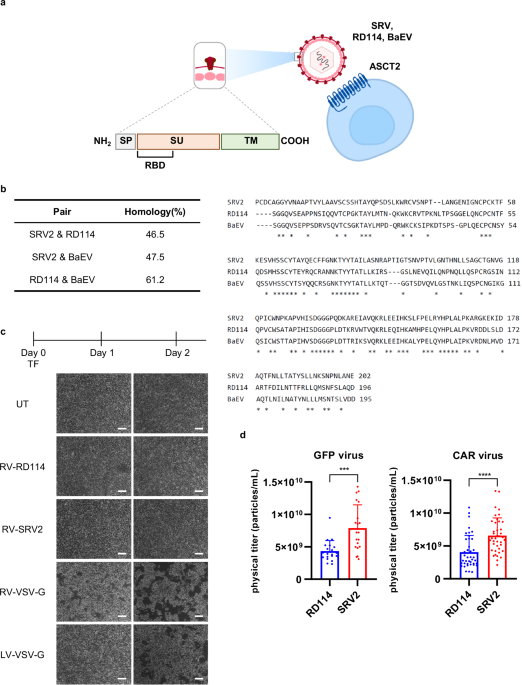
The Breakthrough: A significant advancement in gene therapy and cancer treatment was reported on April 23, 2026, with the discovery of a novel simian retrovirus 2 (SRV2) derived envelope protein for pseudotyping retroviral vectors. This new vector, termed SRV2 RV, has demonstrated superior efficiency in generating CAR-based immune cells, specifically T cells and NK cells, which are crucial for advanced cancer immunotherapies. The findings, published in Nature Communications, highlight SRV2 RV as a highly effective platform for producing these therapeutic cells.
Comparative Efficiency: The research directly compared the gene transduction efficiency of SRV2 RV with existing pseudotyped retroviruses. It was found that SRV2 RV significantly outperformed both feline endogenous retrovirus (RD114) pseudotyped retrovirus (RD114 RV) and vesicular stomatitis virus glycoprotein (VSV-G) pseudotyped lentivirus (VSV-G LV). Among various SRV pseudotypes tested, only the SRV2 RV successfully transduced genes into immune cells, indicating its unique suitability for this application. Notably, a lentivirus pseudotyped with the SRV2 envelope glycoprotein (ENV) failed to mediate gene transduction into T cells, underscoring the specific efficacy of the SRV2 RV construct.
Anticancer Activity and Application: The CAR-T and NK cells generated using the SRV2 RV platform exhibited substantial anticancer activity. This was demonstrated both in vitro, meaning in laboratory settings, and in preclinical models, suggesting strong potential for future clinical applications. Pseudotyped retroviruses and lentiviruses are invaluable tools in gene transduction, facilitating the integration of transduced genes into the target cell's genome for long-term expression. The success of CAR-T cell therapy, in particular, relies heavily on the production of high-quality viral vectors, making this discovery particularly impactful.
Background on Simian Retroviruses: Simian retroviruses (SRV) are classified as type-D retroviruses and were initially identified in a mammary tumor of a rhesus monkey. These viruses are known for their broad cell tropism, capable of infecting both lymphoid and non-lymphoid cells in macaques, and can lead to immunodeficiency syndromes in Asian macaques. The family includes SRV1 through SRV8, which exhibit cross-interference with each other and with type C retroviruses such as RD114, baboon endogenous virus (BaEV), spleen necrosis virus (SNV), and avian reticuloendotheliosis virus (REV). This interference is attributed to their shared use of the same entry receptor, a mechanism that the SRV2 RV leverages for its efficient gene transduction capabilities.
Implications for Immunotherapy: The development of SRV2 RV represents a significant step forward in optimizing the manufacturing process for CAR-based immunotherapies. By providing a more efficient and effective method for gene delivery into T and NK cells, this technology could enhance the potency and reliability of these life-saving treatments. The superior transduction efficiency could lead to higher yields of therapeutic cells, potentially reducing production costs and improving patient outcomes in the fight against various cancers.
Published on August 04, 2026. Fact-checked and verified against referenced sources.
Who Is Affected
Chronology of Events
Publication of SRV2 RV Discovery
Nature Communications publishes findings on the novel simian retrovirus 2 pseudotyped retrovirus (SRV2 RV) for CAR immune cell production.
Entities & Perspectives
Community Sentiment Poll
The Bigger Picture
Advancing Immunotherapy: A New Vector for CAR-T and NK Cell Therapies
The discovery of the simian retrovirus 2 (SRV2) pseudotyped retrovirus (SRV2 RV) as a highly efficient vector for generating CAR-based immune cells marks a pivotal moment in the field of immunotherapy. This development, published in Nature Communications in April 2026, addresses a critical bottleneck in the production of Chimeric Antigen Receptor (CAR) T-cell and Natural Killer (NK) cell therapies: the efficient and reliable transduction of genes into target immune cells. Current methods, while effective, often face challenges related to vector efficiency, safety, and scalability. The SRV2 RV's demonstrated superiority over established vectors like RD114 RV and VSV-G LV in gene transduction efficiency for both T and NK cells suggests a potential paradigm shift. This enhanced efficiency means that fewer viral particles might be needed to achieve therapeutic cell numbers, potentially reducing manufacturing costs and complexity. Furthermore, the robust anticancer activity observed in preclinical models indicates that CAR-T and NK cells produced via SRV2 RV could offer improved clinical efficacy, leading to better patient responses and potentially broader applicability across different cancer types. This innovation could accelerate the development of next-generation immunotherapies, making them more accessible and effective for a wider patient population globally. The ability to generate high-quality, potent immune cells is fundamental to the success of these personalized cancer treatments, and SRV2 RV appears to offer a significant leap forward in this regard.
Economic and Healthcare Implications: Accessibility and Cost of Advanced Cancer Treatments
The economic and healthcare implications of a more efficient viral vector like SRV2 RV are substantial. CAR-T cell therapies, while revolutionary, are currently among the most expensive medical treatments, often costing hundreds of thousands of dollars per patient. A significant portion of this cost is attributed to the complex and labor-intensive manufacturing process, which includes the production of high-quality viral vectors for gene delivery. If SRV2 RV can indeed provide superior gene transduction efficiency, it could lead to several cost-saving benefits. Higher efficiency might translate to reduced quantities of viral vector material required per batch, lower manufacturing failure rates, and potentially shorter production timelines. These efficiencies could, in turn, contribute to a reduction in the overall cost of CAR-T and NK cell therapies. Lower costs would be a critical factor in improving the accessibility of these life-saving treatments, particularly in healthcare systems with budget constraints or in developing nations where such advanced therapies are currently out of reach. Moreover, increased efficiency could enable pharmaceutical companies to scale up production more readily, meeting the growing demand for these personalized medicines. The long-term economic impact could also extend to a reduction in the societal burden of cancer, as more effective treatments lead to improved survival rates, reduced long-term care needs, and increased productivity among survivors. This technological advancement could therefore play a crucial role in democratizing access to cutting-edge cancer care and reshaping the global oncology market.
Ethical Considerations and Regulatory Pathways for Novel Viral Vector Technologies
As with any groundbreaking biotechnological advancement, the introduction of SRV2 RV into clinical practice will necessitate careful consideration of ethical implications and rigorous navigation of regulatory pathways. The use of viral vectors, even pseudotyped ones, always raises questions about potential off-target effects, immunogenicity, and long-term safety. While the preclinical data for SRV2 RV are promising, extensive clinical trials will be required to fully assess its safety profile and efficacy in human patients. Regulatory bodies such as the U.S. Food and Drug Administration (FDA) and the European Medicines Agency (EMA) will scrutinize every aspect of the SRV2 RV platform, from its molecular characteristics to its manufacturing consistency and clinical outcomes. Ethical considerations will also revolve around equitable access to these advanced therapies, ensuring that the benefits of such innovations are not limited to affluent populations. The potential for germline gene editing, even if unintended, is another area of ongoing ethical debate in gene therapy, although current CAR-T approaches focus on somatic cells. Furthermore, the origin of SRV2 from simian retroviruses, while a well-established practice in vector development, will require transparent communication and public education to address any potential concerns regarding zoonotic risks, however theoretical. The scientific community and regulatory agencies will need to collaborate closely to establish clear guidelines for the development, testing, and deployment of SRV2 RV-based therapies, balancing innovation with patient safety and societal well-being. This will involve robust post-market surveillance and long-term follow-up studies to monitor for any unforeseen effects, ensuring that this powerful new tool is utilized responsibly and ethically for the benefit of cancer patients worldwide.
Sources & Citations
The insights in this briefing were curated by our editorial team and synthesized by our intelligence engine using verified reporting from the following primary domains:
About CurrentDebrief Editorial
CurrentDebrief is a neutral intelligence platform. Directed by our human editorial team, our intelligence engine programmatically aggregates, fact-checks, and synthesizes reporting from verified global sources to deliver an objective chronology and broader contextual analysis of developing narratives. We do not endorse the views of any entity profiled.