
Escalating Anti-Immigrant Violence Triggers Mass Exodus of Foreign Nationals from South Africa
Key Takeaways
- Anti-immigrant violence in South Africa has surged in 2026, leading to the mass departure of foreign nationals.
- Groups like Operation Dudula are driving the movement, citing economic grievances and high unemployment as justifications.
- The violence has prompted several African nations to organize emergency evacuations for their citizens.
- Human rights organizations and labor unions have condemned the movement as xenophobic and harmful to social cohesion.
- The crisis highlights deep-seated economic instability and the failure of the state to protect vulnerable migrant populations.
Index Summary
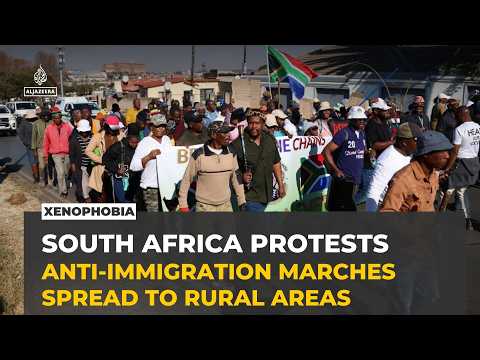
The social and political landscape of South Africa has been profoundly unsettled throughout the first half of 2026 as a wave of anti-immigrant sentiment has surged into overt, often violent, public demonstrations. This movement, which has gained significant traction in urban centers, is characterized by a volatile mix of economic anxiety and nationalist rhetoric. As reported by The New York Times, thousands of foreign nationals have felt compelled to flee the country, seeking safety in their nations of origin as the environment for migrants becomes increasingly untenable. The tension is not merely a localized phenomenon but a systemic crisis that has drawn the attention of international observers and human rights organizations alike.
At the heart of this unrest are groups such as Operation Dudula, which have become the public face of a movement demanding the removal of both documented and undocumented migrants. These organizations argue that the presence of foreign nationals exacerbates existing national struggles, specifically citing high rates of unemployment, the strain on public infrastructure, and concerns regarding local crime. However, these claims are fiercely contested by labor unions and human rights advocates, who characterize the movement as a manifestation of xenophobia that scapegoats vulnerable populations for complex structural failures. The Guardian has documented harrowing accounts from individuals who describe a climate of fear, where the threat of physical assault has become a daily reality for those perceived as outsiders.
This atmosphere of intimidation has led to a significant humanitarian challenge. As the Telegraph reports, the issuance of ultimatums to foreign communities has accelerated the departure of thousands of people, many of whom have lived and worked in South Africa for years. The exodus is not limited to any single nationality, with reports confirming that citizens from Ghana, Malawi, Mozambique, Nigeria, and Zimbabwe are among those returning home. The logistical burden of these evacuations has forced several African governments to intervene, organizing transport and support for their citizens who are essentially being displaced by the rising tide of hostility.
Recent updates from Al Jazeera highlight that the situation remains fluid and dangerous. Aid groups have issued urgent warnings, noting that the intimidation tactics employed by protesters are effectively stripping migrants of their basic rights to security and livelihood. The presence of these groups in neighborhoods and business districts has created a chilling effect, where even those with legal residency are choosing to leave rather than risk the uncertainty of continued residence in a hostile environment. The New York Times has underscored the severity of this by reporting on the emergence of makeshift camps and the desperate scramble for exit routes as the pressure mounts.
It is essential to understand that this movement is deeply rooted in the socio-economic realities of post-apartheid South Africa. The promise of economic prosperity has often been elusive for the majority of the population, and when systemic inequality persists, it is common for political actors to direct public frustration toward marginalized groups. By framing the issue as a zero-sum game between citizens and foreigners, these movements have successfully mobilized a segment of the population that feels left behind by the state. Yet, the long-term implications of this exodus are significant. The departure of thousands of workers, many of whom occupy essential roles in the informal economy and service sectors, threatens to disrupt local commerce and exacerbate the very economic instability that the movement claims to address.
Furthermore, the international reputation of South Africa is being tested. As a regional leader and a member of the African Union, the country is expected to uphold the principles of human rights and regional integration. The current violence stands in stark contrast to these commitments, leading to diplomatic friction with neighboring states. The evacuation of citizens by countries like Ghana is a clear signal that the situation has reached a threshold where regional partners can no longer remain silent. The diplomatic fallout could have lasting consequences on trade, migration policy, and the broader goal of continental unity.
Critics of the government argue that the state has been slow to respond, or worse, that its rhetoric has inadvertently emboldened these anti-immigrant factions. By failing to provide a clear, consistent, and protective stance for all residents, the authorities have allowed a power vacuum to emerge in which vigilante groups feel empowered to enforce their own version of justice. This has led to a cycle of violence where the rule of law is increasingly sidelined in favor of mob action. The Springfield News-Sun has noted that the persistence of these attacks suggests a deep-seated organizational capacity within the movement that is not easily dismantled by standard policing methods.
As we look toward the remainder of 2026, the question remains whether the government can regain control of the narrative and restore order. The challenge is not just one of security but of social cohesion. Rebuilding trust between local communities and the migrant population will require more than just a temporary cessation of violence; it will require a fundamental shift in how the country addresses its internal economic disparities. Without a comprehensive strategy that tackles the root causes of unemployment and poverty, the cycle of xenophobia is likely to continue, leaving the country vulnerable to further instability and international isolation.
Ultimately, the story of the 2026 anti-immigrant movement is a cautionary tale about the fragility of social peace in the face of economic hardship. It serves as a reminder that when the social contract is strained, the most vulnerable are often the first to suffer. The thousands who have fled are not just statistics; they are individuals whose lives have been upended by a wave of intolerance that has swept through their adopted homes. Their departure marks a somber chapter in the history of the region, one that will likely be studied for years to come as a case study in the dangers of unchecked nationalist fervor and the vital importance of inclusive governance.
In the coming months, the international community will be watching closely to see if South Africa can navigate this crisis without further bloodshed. The role of civil society, religious leaders, and political figures will be paramount in de-escalating the situation. There is a desperate need for a national dialogue that moves beyond the binary of citizen versus foreigner and addresses the shared challenges that all residents of South Africa face. Whether such a dialogue can take place in the current climate of fear and intimidation remains an open question, but it is the only path toward a sustainable and peaceful resolution to this ongoing crisis.
Published on July 11, 2026. Fact-checked and verified against referenced sources.
Associated Entities
A South African organization leading anti-immigrant protests and campaigns.
A continental body monitoring the regional impact of the displacement of migrants.
Event Chronology
Ghana initiates evacuations
The government of Ghana begins evacuating hundreds of its citizens from South Africa due to rising safety concerns.
Mass exodus reported
Major media outlets report that thousands of migrants are fleeing South Africa as anti-immigrant attacks intensify.
Humanitarian crisis deepens
The Guardian reports on the fear and displacement of immigrants, noting that many are leaving to avoid physical harm.
Aid groups issue warnings
International aid organizations warn of the ongoing intimidation of migrants and the failure of adequate protection.
Community Sentiment Poll
Broader Context
The unfolding crisis in South Africa during the summer of 2026 serves as a profound and unsettling mirror to the nation's post-apartheid identity, revealing the deep, jagged fault lines that persist beneath the surface of the Rainbow Nation. To understand the cultural weight of this anti-immigrant movement, one must first grapple with the historical trauma of a country that spent decades defining itself by the exclusion of the other. The current wave of violence, while ostensibly driven by economic desperation and the very real pressures of unemployment, is also a manifestation of a fractured national psyche that has yet to reconcile its revolutionary promises with the harsh realities of globalized capitalism. When we look at the rise of groups like Operation Dudula, we are not merely witnessing a localized protest movement; we are seeing the weaponization of belonging. The rhetoric employed by these factions taps into a potent, if misguided, sense of ownership over a land that has historically been contested, creating a narrative where the presence of a foreign national is framed as an existential threat to the dignity and survival of the indigenous citizen. This is a classic, albeit tragic, deployment of scapegoating, where the complexities of structural economic failure are distilled into a binary struggle between the insider and the outsider.
Yet, to dismiss this as mere xenophobia is to ignore the profound cultural anxiety that permeates the South African experience today. For many, the post-apartheid era was supposed to usher in a period of shared prosperity, a time when the fruits of liberation would be distributed equitably among all who call the country home. When those expectations remain unmet, when the gap between the wealthy elite and the struggling masses continues to widen, the resulting frustration seeks a target. It is far easier to point to a neighbor from Zimbabwe or Mozambique and blame them for the lack of jobs or the decay of public services than it is to confront the systemic corruption and mismanagement that have plagued the state for years. This displacement of anger is a cultural phenomenon that transcends borders, but in the South African context, it is uniquely volatile because of the country's history of racialized segregation. The movement effectively repurposes the language of liberation, turning the concept of reclaiming one's country into a tool for exclusion, which creates a deeply ironic and painful contradiction for a nation that once stood as a global symbol of anti-racist struggle.
Furthermore, the cultural significance of this exodus is underscored by the way it challenges the very notion of Pan-Africanism. South Africa has long positioned itself as a regional hegemon and a beacon of hope for the continent, a place where the dreams of the African Renaissance were meant to take root. By forcing thousands of migrants to flee, the country is not just losing labor or human capital; it is actively eroding its soft power and its moral authority within the African Union. The images of families packing their lives into suitcases and boarding buses to return to countries they left years ago are not just humanitarian failures; they are cultural ruptures that signal a retreat from the ideals of continental solidarity. This is a moment of profound introspection for the region, as neighboring nations are forced to reckon with the reality that their citizens are no longer safe in a country that was once seen as the engine of African growth. The diplomatic friction that has ensued is merely the surface manifestation of a much deeper betrayal of the spirit of cooperation that was supposed to define the twenty-first century in Africa.
Consider the role of the informal economy in this narrative. For decades, the streets of Johannesburg and other major cities have been vibrant, multicultural hubs where the exchange of goods and ideas has fueled a unique urban culture. This cosmopolitanism, while often fraught with tension, was a testament to the resilience and adaptability of the South African people. By targeting foreign-owned businesses, the current movement is not just attacking individuals; it is dismantling the very fabric of this urban life. The loss of these businesses means more than just a drop in local tax revenue; it means the erasure of the cultural diversity that has made South African cities such dynamic centers of creativity and innovation. When the markets go quiet and the shops shutter, the city loses its soul, becoming a more insular and fearful place. This is a cultural tragedy that will take generations to heal, as the trust required for a healthy, diverse society is being systematically dismantled by the politics of fear.
There is also a critical gendered dimension to this crisis that warrants deep reflection. Many of the migrants who have been targeted are women and children, individuals who are often the most vulnerable in any society. The violence directed at them is not just an attack on their status as foreigners; it is an assertion of patriarchal control over the public space. When women are intimidated or forced to flee, the entire community suffers, as they are often the primary caregivers and the backbone of the informal social safety net. The silence of many in the face of this violence is a cultural indictment, reflecting a failure to protect the most vulnerable members of society. This speaks to a broader crisis of masculinity and power in South Africa, where the inability to provide for one's family is often translated into a need to exert dominance over those perceived as weaker. It is a cycle of violence that perpetuates itself, as the trauma inflicted on these families will undoubtedly shape the next generation of both the migrants and the citizens who drove them out.
We must also consider the role of media and digital communication in amplifying this movement. In the age of social media, the speed at which misinformation can spread is unprecedented. The anti-immigrant movement has been highly effective at using digital platforms to organize, mobilize, and spread narratives that dehumanize migrants. This has created a digital echo chamber where the most extreme voices are amplified, and the nuance of the human experience is lost. The cultural impact of this cannot be overstated; it has created a climate where the truth is secondary to the emotional resonance of a viral video or a provocative post. This digital landscape has made it incredibly difficult for moderate voices to gain traction, as the algorithm favors conflict and outrage. As a result, the public discourse has become increasingly polarized, making it nearly impossible to have the kind of national dialogue that is desperately needed to address the root causes of this crisis.
Looking at the historical trajectory of South Africa, one cannot help but see echoes of previous periods of instability. The country has a long history of navigating complex social tensions, and it has often done so through the lens of political mobilization. However, the current movement feels different, perhaps because it is happening in a context of global uncertainty and economic fragility. The sense of being left behind is not unique to South Africa, but the way it is being expressed here is deeply rooted in the specificities of the South African experience. The struggle for land, for jobs, and for a sense of belonging is a struggle that has defined the nation for centuries, and this latest chapter is merely a continuation of that ongoing, often painful, process of nation-building. The question is whether the country can move past this phase of exclusionary nationalism and find a way to build a more inclusive future, one that recognizes the shared humanity of all who live within its borders.
This crisis also forces us to confront the limitations of the state. When the government is perceived as failing to protect its citizens or to address their legitimate grievances, the resulting power vacuum is often filled by vigilante groups. This is a dangerous development for any democracy, as it undermines the rule of law and creates a precedent for extrajudicial action. The cultural significance of this cannot be ignored; it signals a loss of faith in the institutions of the state and a turn toward a more primitive form of justice. If the state cannot provide security and order, then the social contract is effectively broken, and the country enters a state of nature where might makes right. This is a terrifying prospect for a country that has worked so hard to build a constitutional democracy, and it highlights the fragility of the progress that has been made since the end of apartheid.
Furthermore, the international community has a role to play in this, though it is often a complicated one. The attention of the world is a double-edged sword; it can bring pressure to bear on the government to act, but it can also be seen as an intrusion into the sovereign affairs of the nation. The cultural impact of this international scrutiny is significant, as it shapes the way the world views South Africa and, in turn, the way South Africans view themselves. There is a tension between the desire to be seen as a modern, democratic state and the reality of the internal struggles that are currently playing out. This tension is a central theme in the current cultural conversation, as the country grapples with its place in the world and its responsibilities to its own people and to the broader African continent.
As we look toward the future, the path forward is far from clear. The immediate priority must be the safety and well-being of those who have been displaced, but the long-term solution lies in addressing the systemic issues that have created this climate of fear. This will require a fundamental shift in how the country approaches economic development, social welfare, and the integration of migrants. It will also require a concerted effort to combat the xenophobic narratives that have taken root in the public consciousness. This is not a task that can be accomplished overnight; it will require the sustained commitment of political leaders, civil society, and the broader public. It is a challenge that will test the resilience of the South African democracy and the strength of its commitment to the values of equality and justice.
Ultimately, the cultural significance of this movement lies in its ability to force a reckoning. It is a moment of truth for South Africa, a time when the nation must decide what kind of future it wants to build. Will it be a future defined by exclusion and fear, or one that embraces the diversity and potential of all its people? The thousands who have fled are a reminder of the cost of inaction, and their stories will continue to haunt the national consciousness for years to come. The challenge for South Africa is to turn this tragedy into a catalyst for change, to use the pain of this moment to build a more inclusive and resilient society. It is a daunting task, but it is the only way to ensure that the promise of the post-apartheid era is not lost to the forces of division and despair.
There is a profound sense of loss that permeates the current atmosphere. The loss of community, the loss of trust, and the loss of the vibrant, multicultural spirit that once defined the urban centers of South Africa. This loss is not just felt by the migrants who have been forced to leave; it is felt by the entire nation, as it struggles to come to terms with the reality of its own intolerance. The cultural impact of this is deep and lasting, as it creates a sense of alienation and division that will be difficult to overcome. The challenge is to find a way to rebuild these connections, to foster a sense of belonging that is not based on nationality or ethnicity, but on the shared experience of living and working together in a common space.
In the end, the story of the 2026 anti-immigrant movement is a story about the human condition. It is about the fear of the unknown, the struggle for survival, and the desire for a better life. It is a story that has been told many times throughout history, in many different parts of the world, and it is a story that continues to resonate today. The challenge for South Africa is to write a different ending to this story, one that is defined by compassion, understanding, and a commitment to the common good. It is a challenge that will require courage, vision, and a willingness to confront the uncomfortable truths about the past and the present. It is a challenge that will define the future of the nation for generations to come.
As we consider the broader implications, we must also recognize the role of history in shaping the present. The legacy of colonialism and apartheid continues to cast a long shadow over the country, influencing the way people think about race, class, and belonging. The current movement is, in many ways, a reaction to this legacy, an attempt to reclaim a sense of identity that has been shaped by centuries of struggle. However, it is a reaction that is fundamentally flawed, as it seeks to solve the problems of the present by repeating the mistakes of the past. The challenge is to break this cycle, to find a new way to define the South African identity that is inclusive and forward-looking, rather than one that is rooted in the divisions of the past.
This is a moment of profound significance for the continent as well. South Africa's experience is a reflection of the challenges that many African nations are facing as they navigate the complexities of globalization and the pressures of migration. The way South Africa handles this crisis will have a ripple effect across the region, influencing the way other countries approach these issues. It is a test of the continent's ability to manage its own internal conflicts and to build a future that is based on cooperation and mutual respect. The eyes of the world are on South Africa, and the outcome of this crisis will have far-reaching consequences for the future of the entire continent.
There is a need for a new kind of leadership, one that is capable of addressing the root causes of this crisis and of fostering a sense of national unity that transcends the divisions of the past. This leadership must be able to speak to the fears and anxieties of the people, while also providing a vision for a more inclusive and prosperous future. It must be a leadership that is committed to the principles of human rights and the rule of law, and that is willing to take the difficult steps necessary to build a more just and equitable society. This is a tall order, but it is the only way to ensure that the country can move past this period of instability and build a future that is worthy of its people.
We must also consider the role of the youth in this process. The younger generation in South Africa is more connected and more aware of the world than any generation before it. They have the potential to be a powerful force for change, to challenge the prejudices of the past and to build a more inclusive future. However, they are also the most vulnerable to the rhetoric of the anti-immigrant movement, as they are the ones who are most directly affected by the lack of jobs and the economic uncertainty. The challenge is to engage them in a meaningful way, to provide them with the tools and the opportunities they need to build a better life for themselves and for their country. This is a critical investment in the future of the nation, and it is one that cannot be ignored.
As we reflect on the events of 2026, we are reminded of the fragility of peace and the importance of vigilance. The progress that has been made in South Africa is not guaranteed; it must be protected and nurtured every day. The current crisis is a stark reminder of how quickly things can change, and how easily the gains of the past can be lost. It is a call to action for all those who believe in the values of equality, justice, and human rights. It is a time for solidarity, for dialogue, and for a commitment to building a future that is inclusive and prosperous for all. The road ahead will be difficult, but it is a road that must be traveled if the nation is to reach its full potential.
In conclusion, the 2026 anti-immigrant movement in South Africa is a complex and multifaceted phenomenon that reflects the deep-seated anxieties and challenges of a nation in transition. It is a story of economic struggle, social fragmentation, and the search for identity in a rapidly changing world. The cultural significance of this movement lies in its ability to force a reckoning with the past and to challenge the nation to define its future. It is a moment of profound significance, not just for South Africa, but for the entire continent. The way the country navigates this crisis will determine its path for years to come, and the world will be watching to see if it can rise to the challenge. The hope is that it will emerge from this period of instability stronger, more united, and more committed to the values that have defined its journey toward freedom and democracy.
Sources & References
This briefing was compiled using data scraped from the following reputable news outlets and search indices:
-
South African protesters intimidate migrants as aid group issues warning - Al Jazeera
Source: Al Jazeera
-
Thousands Flee South Africa as Anti-Immigrant Attacks Grow - The New York Times
Source: The New York Times
-
‘They will attack me if I stay’: immigrants in South Africa flee for safety amid violence and anti-foreigner protests - The Guardian
Source: The Guardian
-
www.nytimes.com/2026/06/26/world/africa/south-africa-migrant-camps-deadline.html
Source: nytimes.com
-
www.telegraph.co.uk/global-health/terror-and-security/thousands-flee-south-africa-ahead-anti-foreigner-ultimatum/
Source: telegraph.co.uk
-
www.theguardian.com/world/2026/jun/30/they-will-attack-me-if-i-stay-immigrants-in-south-africa-flee-for-safety-amid-violence-and-anti-foreigner-protests
Source: theguardian.com